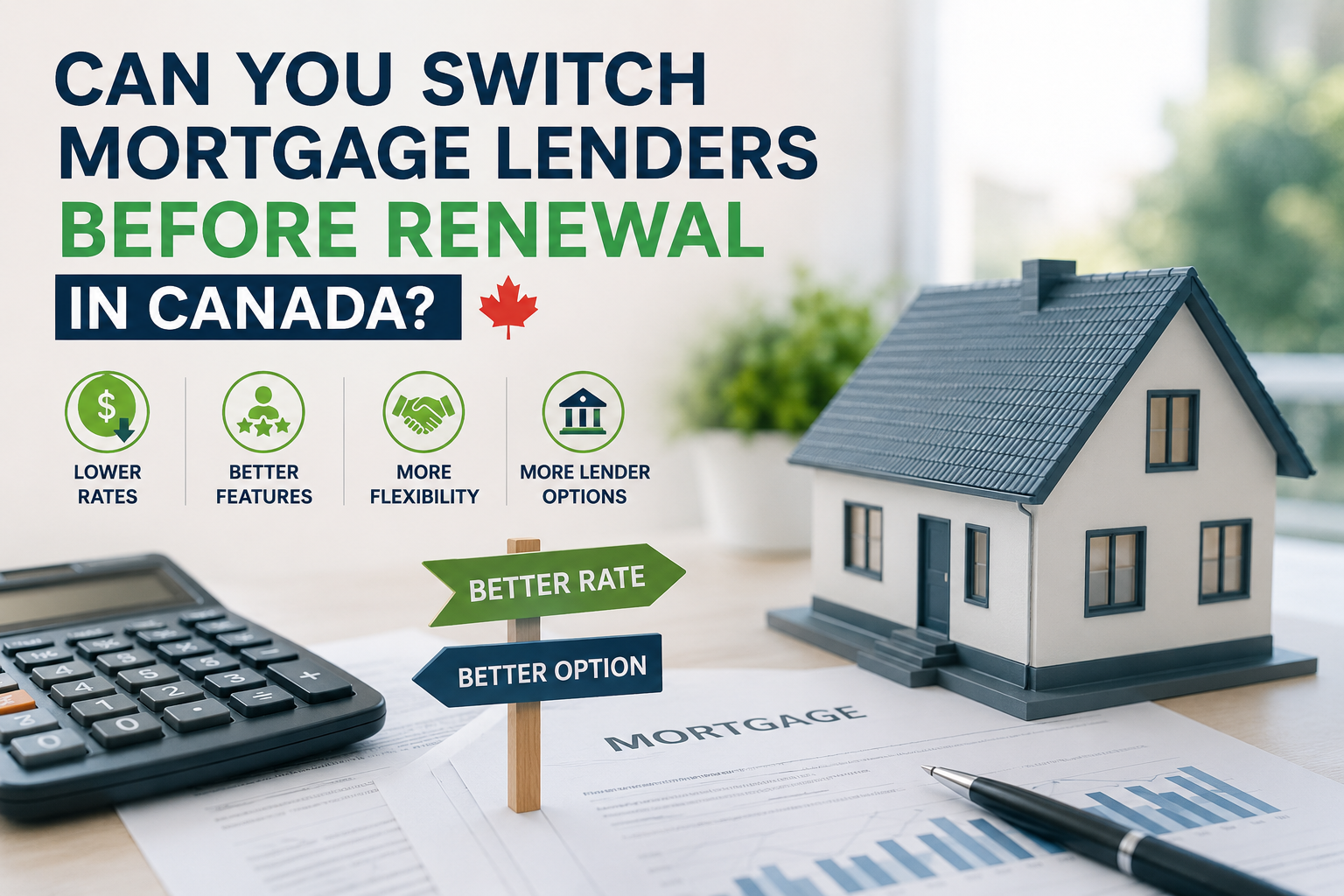
If you’re wondering whether you can switch mortgage lenders before your renewal date, the answer is yes. Many Canadian homeowners choose to move their mortgage to another lender before renewing in order to secure a better interest rate, lower monthly payments, or gain access to more flexible mortgage features.
However, switching lenders requires careful planning. Understanding when and how to make the change can help you avoid unnecessary penalties and make the most of your mortgage options.
Can You Change Mortgage Lenders Before Renewal?
Yes, Canadian homeowners can switch mortgage lenders before their mortgage renewal. In fact, many lenders allow borrowers to begin the process up to 120 days before their mortgage maturity date.
Changing lenders before renewal gives you the opportunity to compare rates, review mortgage terms, and find a product that better suits your financial goals. Since your mortgage term is ending, most borrowers can switch without paying a prepayment penalty.
Working with an experienced mortgage broker can simplify the process and provide access to multiple lenders through a single application.
Why Do Homeowners Switch Mortgage Lenders?
There are several reasons why Canadians choose to move their mortgage to a different lender.
Lower Interest Rates
Even a small reduction in your mortgage rate can lead to significant savings over the life of your mortgage.
Better Mortgage Features
Some lenders offer flexible prepayment options, shorter amortization periods, or portable mortgages that may better fit your needs.
Improved Customer Service
Homeowners may switch to lenders that provide better communication, digital banking tools, or a more personalized experience.
Debt Consolidation Opportunities
Refinancing or switching lenders can provide an opportunity to consolidate high-interest debts into your mortgage.
Access to Specialized Mortgage Solutions
Self-employed borrowers, first-time home buyers, and homeowners with unique financial situations may find more suitable options with another lender.
When Should You Start Shopping for a New Mortgage?
Most lenders allow borrowers to secure a new mortgage rate up to four months before renewal.
Starting early provides time to:
Compare mortgage rates.
Review mortgage terms and conditions.
Gather required documents.
Avoid rushing into your lender’s first renewal offer.
Many homeowners simply sign their existing lender’s renewal agreement without exploring other options, potentially missing out on better rates and features.
Is There a Cost to Switch Mortgage Lenders?
Switching lenders at renewal is often free for standard mortgage transfers.
Some lenders may cover:
Appraisal fees.
Legal fees.
Transfer costs.
However, additional expenses may apply if:
You refinance and increase the mortgage amount.
You break your mortgage before maturity.
Your mortgage includes special conditions.
Reviewing the total cost of switching can help determine whether changing lenders makes financial sense.
What Happens if You Switch Before Your Mortgage Term Ends?
Switching lenders before your mortgage maturity date is possible, but breaking your mortgage early usually results in prepayment penalties.
These penalties can vary depending on:
Fixed-rate or variable-rate mortgage.
Remaining term length.
Outstanding mortgage balance.
Your lender’s penalty calculation method.
Before making a move, it’s important to calculate whether the savings from a lower interest rate outweigh the cost of breaking your existing mortgage.
How Does the Mortgage Transfer Process Work?
Switching lenders in Canada is generally straightforward.
Step 1: Compare Mortgage Rates
Research lenders or work with a mortgage broker to identify competitive options.
Step 2: Submit an Application
Provide income verification, employment details, and information about your existing mortgage.
Step 3: Receive Mortgage Approval
The new lender will review your financial profile and property details.
Step 4: Complete the Transfer
Legal and administrative documents are finalized, and your new lender pays out the existing mortgage.
In many cases, homeowners experience little disruption during the transition.
Should You Use a Mortgage Broker When Switching Lenders?
A mortgage broker can help you:
Compare rates from multiple lenders.
Understand mortgage terms and penalties.
Identify products that align with your financial goals.
Manage paperwork and the transfer process.
Save time by submitting one application to several lenders.
Mortgage brokers provide valuable guidance and can help borrowers make informed decisions throughout the renewal process.
Key Takeaways
You can switch mortgage lenders before renewal in Canada.
Most borrowers can change lenders without penalties during the renewal period.
Shopping around may help you secure a lower mortgage rate and better features.
Starting the process up to 120 days before maturity provides more options.
Breaking your mortgage early could result in prepayment penalties.
A mortgage broker can help simplify the transfer process and compare lenders on your behalf.
Frequently Asked Questions
Can I switch mortgage lenders before my renewal date?
Yes. Most lenders allow homeowners to begin the transfer process up to 120 days before their mortgage matures.
Do I pay penalties when switching at renewal?
Generally, no. Switching during the renewal period typically does not involve prepayment penalties.
Is switching mortgage lenders worth it?
For many homeowners, switching lenders can provide access to lower rates, better terms, and potential savings over the life of the mortgage.
How long does it take to switch lenders?
The mortgage transfer process can take several weeks, so starting early is recommended.
Can a mortgage broker help me switch lenders?
Yes. Mortgage brokers can compare lenders, explain your options, and guide you through the entire process.
 780-466-9898