 780-466-9898
Buying a home in Edmonton is an important financial decision, but qualifying for a mortgage involves more than having a steady income and enough money for a down payment. Your existing financial obligations also play a significant role in determining how much you may be able to borrow.
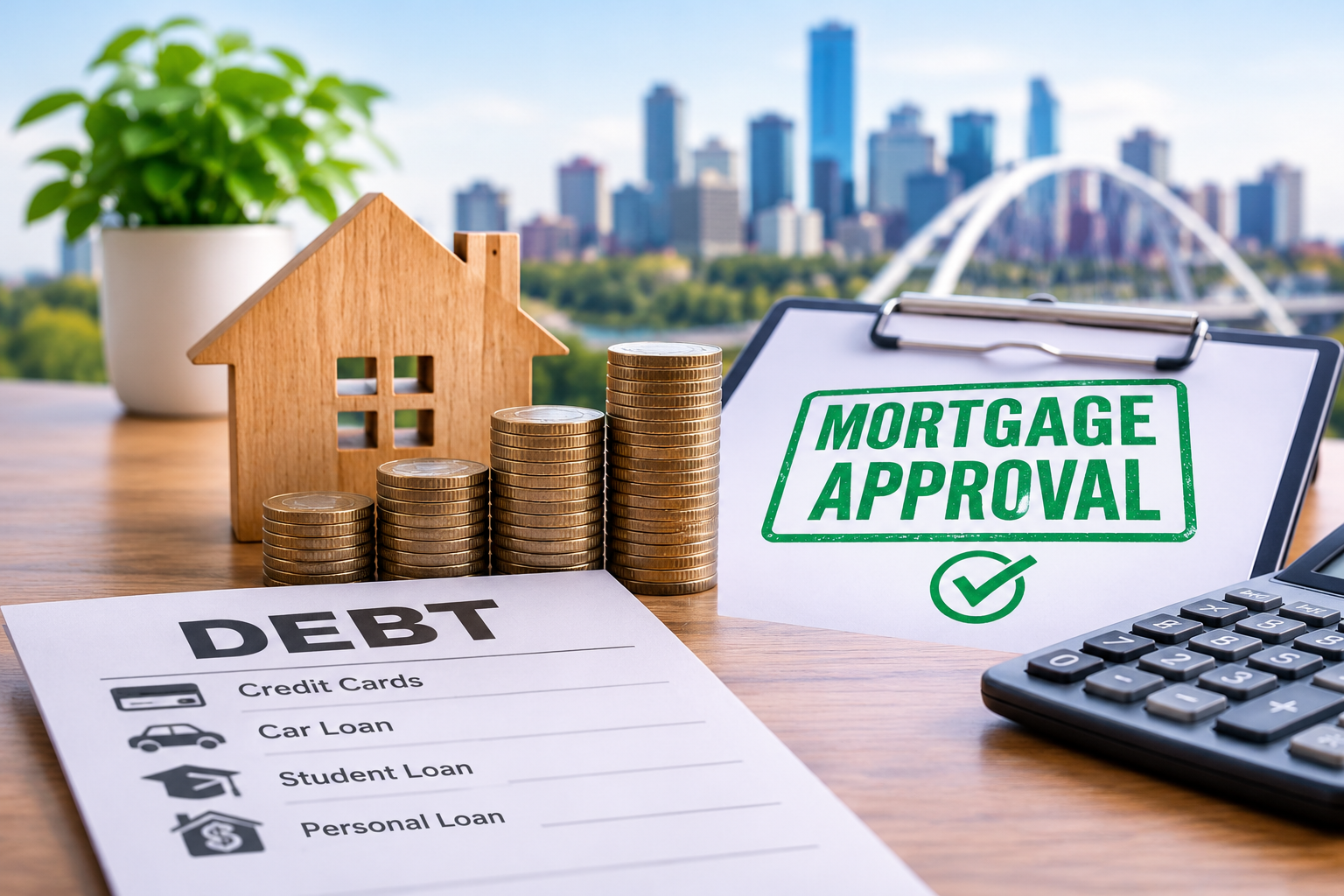
With many Canadian households managing car payments, credit card balances, personal loans, student loans, and other monthly expenses, household debt can influence mortgage affordability and lender approval decisions.
If you are planning to purchase a home in Edmonton, understanding how your existing debt affects your mortgage application can help you prepare financially, avoid unnecessary surprises, and make more informed borrowing decisions.
At Mortgage Apply Online, understanding your financial position is an important part of finding mortgage solutions that align with your homeownership goals.
Mortgage lenders evaluate your overall financial situation to determine whether you can comfortably manage a new mortgage payment alongside your existing financial commitments.
Your income may appear sufficient to purchase a particular property, but outstanding debts can reduce the amount a lender is willing to approve.
For example, consider someone earning a stable annual income who also has:
Monthly vehicle payments
Outstanding credit card balances
Personal loan payments
Student loan obligations
Other recurring debt payments
These expenses reduce the amount of monthly income available for housing costs.
Lenders consider these obligations when assessing mortgage affordability. As a result, two applicants earning similar incomes may qualify for different mortgage amounts because their existing debt levels are different.
One of the important factors lenders examine during mortgage qualification is the relationship between your income and monthly debt obligations.
In Canada, lenders commonly use two affordability measurements:
Gross Debt Service (GDS) Ratio
The GDS ratio measures the portion of your gross monthly household income required to cover housing costs. These generally include:
Mortgage principal and interest payments
Property taxes
Heating costs
A portion of condominium fees, where applicable
Total Debt Service (TDS) Ratio
The TDS ratio considers your housing expenses along with other monthly debt obligations, including:
Car loans and vehicle financing
Credit card payments
Personal loans
Student loan payments
Other applicable debt obligations
A higher TDS ratio may make mortgage qualification more difficult because a larger portion of your income is already committed to debt repayment.
Lenders generally assess these ratios alongside other qualification requirements. The applicable limits can depend on the mortgage product, lender, and borrower circumstances.
Not all debt affects mortgage qualification in exactly the same way. Here are some common financial obligations that may influence your application.
Credit card debt can affect mortgage affordability even if you make regular payments every month.
Lenders may calculate a required monthly payment based on your outstanding balance or their own qualifying methodology. Carrying large balances across multiple credit cards can increase your debt obligations.
Reducing credit card balances before applying for a mortgage may help improve your overall financial position.
Vehicle financing is another important consideration for Edmonton homebuyers.
If you have a monthly car payment, that amount reduces the income available for housing expenses.
For example, a monthly vehicle payment of $650 represents $7,800 in annual payments. That commitment can affect how much mortgage debt you may qualify for.
Personal loans used for renovations, travel, purchases, or debt consolidation can increase your monthly financial obligations.
Even if the loan balance is relatively small, the required monthly payment may influence your mortgage qualification.
Student loan payments may also be included in mortgage affordability calculations.
Whether you are repaying government student loans or private education financing, lenders will consider the applicable repayment obligations when reviewing your financial situation.
Personal lines of credit and other revolving credit facilities can affect your borrowing capacity.
Lenders may consider outstanding balances, required payments, and applicable lending policies when assessing your application.
Yes. Higher monthly debt obligations can reduce the mortgage amount a lender is willing to approve.
Consider two hypothetical Edmonton homebuyers with similar incomes:
Applicant A
Stable employment income
Minimal credit card balances
No vehicle financing
Limited monthly debt payments
Applicant B
Similar employment income
Outstanding credit card balances
Monthly vehicle financing
Additional personal loan payments
Although both applicants earn similar incomes, Applicant A may qualify for a higher mortgage because fewer financial obligations reduce their available borrowing capacity.
The actual mortgage amount depends on several factors, including income, interest rates, qualifying payments, property expenses, credit history, down payment, and lender requirements.
This is why reviewing your existing debt before beginning your Edmonton home search can be an important step.
Having household debt does not automatically mean you will be declined for a mortgage.
There are several practical steps you can consider before submitting your application.
Reducing outstanding credit card balances can lower your monthly financial obligations and may improve your credit utilization.
Focus on paying down revolving debt while maintaining regular payments on all your accounts.
If you are planning to apply for a mortgage, consider postponing major purchases that require financing.
Taking out a new vehicle loan, opening additional credit accounts, or financing expensive purchases can change your debt-service ratios and affect your mortgage qualification.
Create a realistic household budget that includes:
Rent or current housing costs
Vehicle payments
Credit card payments
Personal loans
Utilities and insurance
Savings and emergency funds
Understanding where your money goes can help you identify opportunities to reduce unnecessary expenses.
Review your credit report before applying for a mortgage. Look for incorrect account information, outstanding balances, missed payments, or accounts you do not recognize.
Correcting inaccurate information can help ensure lenders receive a more accurate picture of your financial history.
A mortgage professional can review your income, existing debts, credit history, and down payment to help you understand your potential borrowing options.
You may also be able to explore different mortgage products or lenders depending on your financial circumstances.
Not necessarily.
Paying off every outstanding debt before purchasing a property is not always the most effective financial strategy.
The important consideration is whether your existing debt payments leave enough room in your budget to manage a mortgage comfortably.
For example, paying off a high-interest credit card may improve your financial position. However, using all your available savings to eliminate debt could leave you without sufficient funds for your down payment, closing costs, or emergency expenses.
A balanced approach considers both debt repayment and the money you need to complete your home purchase.
A mortgage professional can help you assess which financial steps may make the most sense before applying.
First-time homebuyers often face several financial responsibilities before entering the housing market.
Along with saving for a down payment, they may be managing student loans, vehicle payments, credit cards, and everyday living expenses.
These obligations can make mortgage qualification more challenging, particularly when trying to purchase a home within a specific budget.
Before starting your home search, consider:
Reviewing your total monthly debt payments.
Determining how much you can comfortably afford.
Understanding your potential mortgage qualification amount.
Keeping additional funds available for closing costs.
Avoiding unnecessary new debt before mortgage approval.
Planning ahead can help first-time buyers make more confident homeownership decisions.
Many buyers begin searching for homes based on the purchase prices they believe they can afford. However, the amount a lender is prepared to approve may differ from their expectations.
A mortgage review before house hunting can help you understand your financial position and identify potential qualification concerns early.
For Edmonton homebuyers, this can be particularly useful when comparing properties, evaluating monthly payments, and planning for additional homeownership expenses.
Working with an experienced mortgage professional can also help you understand the available mortgage options based on your financial circumstances.
Yes. Credit card debt can affect mortgage qualification because lenders consider the required monthly payments when calculating debt-service ratios. Higher balances may reduce your available borrowing capacity.
Yes. Having a vehicle loan does not automatically disqualify you from getting a mortgage. However, your monthly vehicle payments are generally considered when lenders assess your total debt obligations.
The Total Debt Service ratio measures the percentage of your gross monthly income required to cover housing expenses and other applicable debt payments. Lenders use it to evaluate whether you can manage your overall financial obligations.
Reducing credit card balances may improve your mortgage affordability and credit utilization. However, it is important to balance debt repayment with maintaining enough savings for your down payment and closing costs.
Yes. Lenders consider your existing financial obligations during mortgage pre-approval. If your debt levels increase or your financial circumstances change, your final mortgage approval may also be affected.
A mortgage broker can review your financial situation, assess potential qualification challenges, and explore mortgage options from lenders that may suit your circumstances. Approval is always subject to lender requirements.
Household debt is an important part of mortgage qualification. Even when you have a stable income and a sufficient down payment, existing monthly obligations can influence how much you may be able to borrow.
For Edmonton homebuyers, taking time to review credit card balances, vehicle financing, personal loans, and other financial commitments can make the mortgage application process more predictable.
You do not necessarily need to eliminate every debt before purchasing a home. Instead, understanding how your financial obligations affect your borrowing capacity can help you make better decisions.
Planning to buy a home in Edmonton?
Contact The Mortgage Force Team – Mortgage Apply Online to discuss your mortgage options and understand how your current financial situation may affect your mortgage qualification.
Mortgage approval, qualification amounts, and available products are subject to lender guidelines, verification of financial information, and applicable mortgage requirements.
Posted by MortgageApplyOnline On November 18th, 2026